


Our Work
Training & Workshops
Capacity-building for civil society
About the Programme
AMAN Trust organizes seminars, talks, film screenings, workshops and other group activities with an objective to have free-flowing, informed discussions on issues concerning conflict and peacekeeping.
Aman's training and workshop programme invests in people — building the knowledge, skills, and confidence of individuals working at the frontline of social change. From one-day community events to multi-day residential training programmes, our workshops are designed to be practical, participatory, and transformative.
Field Projects
Documented training and workshop initiatives implemented by AMAN.
Interventions with the PRI Elected Women Representatives (EWRs)
People of four Panchayats of Basantpur and Chhatapur blocks of Supaul district have been partners in change in the region for the last three years, instrumental in a wide range of initiatives after the disastrous floods of 2008.
As an expansion of these activities, AMAN began working with the Elected Women Representatives (EWRs) of the Panchayati Raj System in the two blocks. With support from The Hunger Project, Aman organised four Women Leadership Workshops (WLWs) with over 70 EWRs from the two blocks. The first two WLWs were implemented in January, one in each block — 35 EWRs (including two Mukhiyas and a deputy-Mukhiya) participated in Basantpur, and 36 participants (including two Mukhiyas) in Chhatapur. Sessions covered the position of an elected woman representative in a gendered and patriarchal society, roles and responsibilities of EWRs, mental and social mapping, village planning, and active listening and articulation skills. One of the biggest achievements was that 16 Muslim women participated in the sessions and stayed outside their homes for three days to attend.
The success of the workshops was visible in the field. Within a fortnight, the EWRs organised ward meetings in their respective wards, facing challenges from male counterparts, Mukhiyas and village secretaries who did not appreciate the planning and needs-assessment activities at the grassroots level. Under the leadership of their ward members, villagers listed and prioritised their needs before preparing demand letters for the authorities. In Basantpur, safe drinking water and toilets topped the priority list in most Panchayats, and dialogue with local authorities began positively after the ward-level meetings. As a result, UNICEF, in collaboration with the local administration, took up the issues and began organising Panchayat-level meetings of elected representatives to launch a programme for toilet construction and hand pump installation in the region.
During the Ward Sabhas, it was noted that there is a huge demand for information on the PRI system among villagers. It was encouraging to see the EWRs conducting meetings and responding to queries and obstacles posed by villagers and mischief-mongers alike.
After a gap of 45 days, a second set of WLWs was implemented as follow-up. Some participants of the earlier workshop could not attend this time due to the marriage season and other reasons — 24 EWRs attended in Basantpur and 30 in the Chhatapur follow-up.
Over the following four months there was a marked change in the outlook, attitude, behaviour and initiative of the EWRs. Where previously the husbands of EWRs used to participate in official transactions, the women themselves were now taking charge of their responsibilities and could be seen at local offices for different purposes.
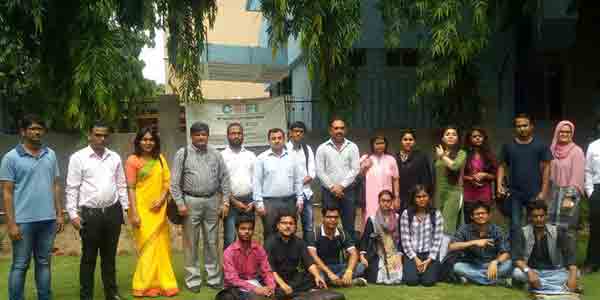
TechCamp Delhi
Event Period: 5-6 August 2017
Aman Trust, in collaboration with COVA, Hyderabad, and Word for Peace, organized a TechCamp in New Delhi on 5-6 August 2017 at the Indian Social Institute (ISI), Lodhi Road, New Delhi.
COVA had organised the first TechCamp to counter online hate campaigns in Hyderabad, in which 32 participants from 7 countries and 16 participants from 6 cities across India gained expertise in using social media to counter online hate campaigns and fanatic indoctrination.
Online media is increasingly used for hate campaigns spreading misinformation aimed at creating distrust and alienation between communities, resulting in conflict and violence. Communities across the world are increasingly afflicted by online indoctrination, with fanatic ideology and violence becoming more organised and widespread. To address these socially divisive trends arising from the misuse of social media, and to promote understanding and peace in and through cyberspace, the concept of TechCamps to counter online fanatic indoctrination was developed.
Participants at the Delhi TechCamp included progressive religious scholars, media persons, social activists, academics and youth, who were trained to gain expertise in using social media for peace and understanding, and to counter misinformation and hate campaigns.
"The objective of our events is to have free-flowing, informal but informed discussion on issues concerning Aman Trust's work."
— Aman Charitable Trust
Workshop Types
Four core workshop tracks, each tailored to the needs of different participant groups.
Peace Education & Conflict Resolution
Equipping community members, teachers, and youth workers with the frameworks and skills to prevent and de-escalate social conflict.
Legal Literacy & Rights Awareness
Making law accessible — training communities to understand their legal rights, entitlements, and remedies under Indian law.
Livelihood & Skill Training
Hands-on vocational workshops enabling economic independence for youth, women, and informal workers.
Advocacy & Documentation Skills
Building the capacity of grassroots organisations to document incidents, write reports, and advocate effectively at local and national levels.
Who Attends
Our workshops bring together a diverse mix of civil society organisations, grassroots community workers, government functionaries, youth activists, lawyers, journalists, and academics — creating spaces for genuine, informed dialogue.
Register Interest